When to Cut Hedges Without Harming Nesting Birds
Deciding when to cut hedges means checking more than the month. The right appointment depends on the plants, whether birds are nesting and whether agricultural hedgerow rules apply. For a garden in Wellington, begin with the purpose of the cut and agree a date that can change if wildlife or weather makes the work unsuitable.
Separate garden hedges from farm hedgerows
England has a specific restriction for hedgerows covered by agricultural management rules. Rural Payments Agency guidance, updated on 6 November 2026, says these must not be cut or trimmed between 1 March and 31 August, subject to defined exemptions. Establish whether your boundary falls within those rules before booking. A hedge beside a house is not automatically outside their scope because one side faces a garden.
Tell the contractor what lies on both sides, who manages the land and whether any scheme agreement applies. Do not assume a gardening recommendation overrides an agricultural restriction. Equally, avoid treating that restriction as a universal statutory ban on every domestic hedge. The site and work determine which requirements apply.
Check for nesting activity before starting
Natural England’s bird protection guidance explains that nests being used or built are protected. This applies beyond a convenient spring-to-summer diary window. A September booking does not establish that a dense hedge is free of nesting activity.
Let the contractor assess the hedge before starting. Do not push through branches to find a nest yourself or move one so cutting can continue. If activity is found, stop affected work and agree how to avoid harm. A quiet hedge seen briefly from a window is not a reliable basis for declaring it clear.
Match the appointment to the intended cut
Explain whether you need this year’s shoots tidied, a flowering hedge shaped or substantial height removed. These are different jobs. Species and growth patterns affect the suitable window and how much living growth should remain. A maintenance trim should not quietly become major renovation because the hedge looks larger from the other side.
Ask for the finished outline to be described before work starts. With several species, note them separately. One appointment may not suit every length. If the treatment is uncertain, use the first visit to establish a plan rather than committing to a severe cut.
Need help managing your hedges?
Blackdown Treescapes provides tree surgery, hedge care and woodland management across our service areas, including:
Keep flowers and berries in the plan
A uniform boundary can conflict with retaining food and shelter. Where space and safety permit, discuss leaving selected sections until later or using a rotation. Decide which parts must be controlled now and which can retain growth, rather than assuming the entire boundary needs identical treatment.
A driveway hedge may need a different specification from an unused rear boundary. Mark safety-critical sections clearly. If an agricultural exemption is being considered, retain the required record and limit cutting to what the exemption permits. Other wildlife obligations still need consideration.
What the latest hedgerow figures show
The ONS farmland accounts published in July 2026 report an estimated 378,000 kilometres of hedgerow in England for 2022–23. That is a dated national estimate, not a measurement of the hedge outside your home. It illustrates the scale of habitat affected by individual management decisions.
For your boundary, keep a simpler record: date cut, sections treated, wildlife observations and next review. Photographs from the same positions help compare changes in width, density and bare patches without guessing.
Prepare a booking that can adapt
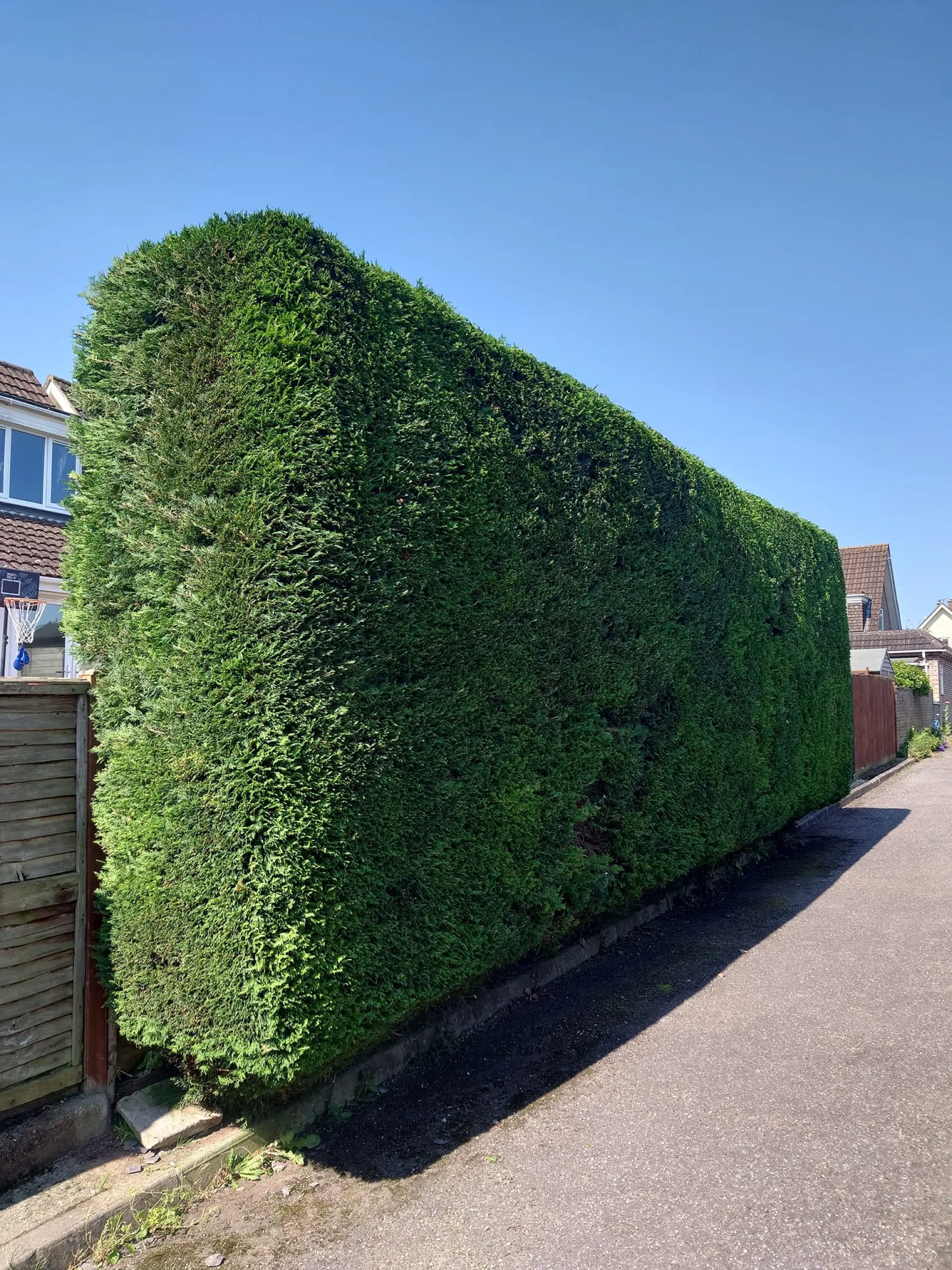
Send photographs showing the length and both ends, with approximate dimensions. Describe pavement access, vehicles, narrow gates and neighbouring land. Ask whether clearance is included and where the team will work from. Agree what happens if the visit reveals nesting birds or unsuitable conditions.
Avoid automatically repeating the last specification. Check whether the hedge still needs the same amount removed and whether its purpose has changed. Written instructions help retain privacy while controlling growth and avoiding unnecessary disturbance.
Summary
A suitable hedge-cutting date combines the applicable rules, a wildlife check and a species-specific specification. Blackdown Treescapes can discuss maintenance around those constraints and help plan a manageable boundary without treating every hedge alike.