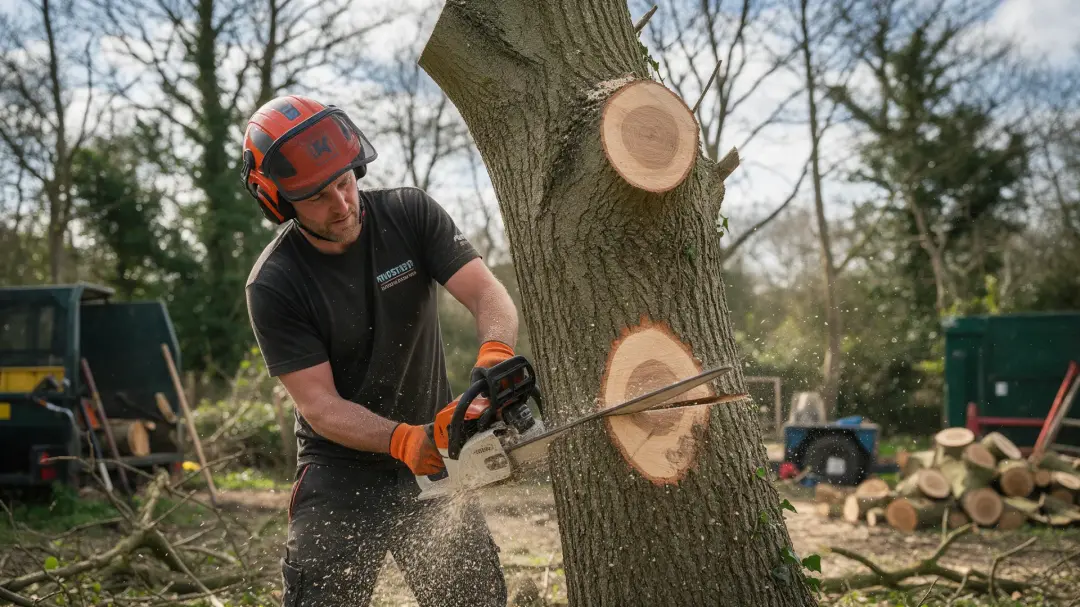
What Happens to the Wood After a Tree Is Removed?
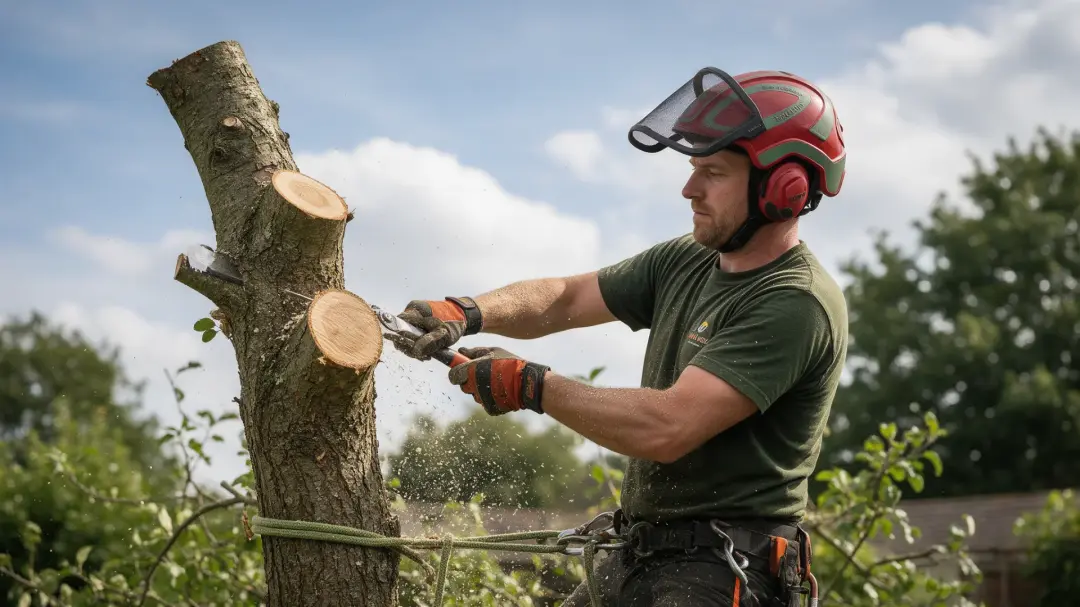
A removed tree is usually separated into trunk lengths, smaller branches and leafy material. Sound stem wood may be milled or processed into logs, smaller branches can be chipped, and suitable pieces can remain as wildlife habitat. The destination depends on condition, access and the agreement in your quotation.
Tell the contractor what you want before cutting starts. A trunk intended for boards needs different cutting and handling from material destined for short firewood rounds.
Agree ownership and clearance in writing
Check whether the quotation includes removing all material, leaving selected pieces or stacking logs on site. Do not assume the contractor will buy the wood or discount a large tree because its trunk looks valuable. Loading, transport, processing and hidden defects can outweigh its potential return.
Specify the retained lengths and stacking position. Make sure wood will not obstruct access or require later machine movements across vulnerable paving or lawn. Keeping a large pile is only useful if you can safely process and store it.
Milling depends on usable wood and access
Species, straightness, diameter, knots, cracks and decay affect the boards obtainable from a stem. Embedded nails or boundary wire are another concern in garden trees. Discuss the intended product with a sawyer before dismantling, including workable log lengths and loading access.
The site's wood-milling service is an option to discuss separately from removal. Freshly sawn boards still require appropriate drying and may move or split as they lose moisture. A handsome tree does not automatically yield furniture-grade timber.
Firewood must be dried and checked
Fresh logs are not ready for a stove simply because they have been cut. Defra's current seasoning notice advises 20% moisture or less before burning. Test rather than relying on appearance.
Ask whether retained wood is left in rounds or split pieces. Store with ventilation and rain protection. Drying time changes with species, size and conditions, so a fixed number of months is unreliable. Fuel-sale requirements and local smoke-control rules are separate issues; check your appliance and never burn painted or preservative-treated timber as normal firewood.
Branch chips and green material
Chips can be useful on paths or as surface mulch where appropriate. Explain the intended use before arranging a load. Keep chips away from direct contact with living trunks and do not bury a replacement rootball in stump grindings or fresh chipped wood.
Leafy material may go to a facility that accepts green waste. Disease or invasive plants can change the disposal requirements. Chipping does not establish that material is safe to spread on another property.
Retaining logs for habitat
A stable pile in a quiet, suitable corner can provide shelter and decomposing material for wildlife. Position it away from access routes and places where rolling wood could cause harm. Habitat retention does not mean leaving unstable limbs above people.
For woodland-scale work, Forest Research's deadwood practice guide describes a long-term reference of roughly 20 cubic metres per hectare averaged across a management unit. This older ecological guidance is not a current target for every garden or an instruction to distribute deadwood uniformly.
The latest final timber figures
Forestry Statistics 2025 records 10.4 million green tonnes of UK roundwood delivered to processors and others in 2024, a 6% increase on the previous year. These are the latest final annual figures available at the 8 October 2026 research date. They describe national timber supply, not the proportion of garden-tree wood recycled or the sale value of an individual trunk.
Summary
Timber, firewood, chips and habitat logs each need a clear plan. Tell Blackdown Treescapes which material you would like to retain before removal, so cutting lengths, access and disposal can be agreed around its intended use.