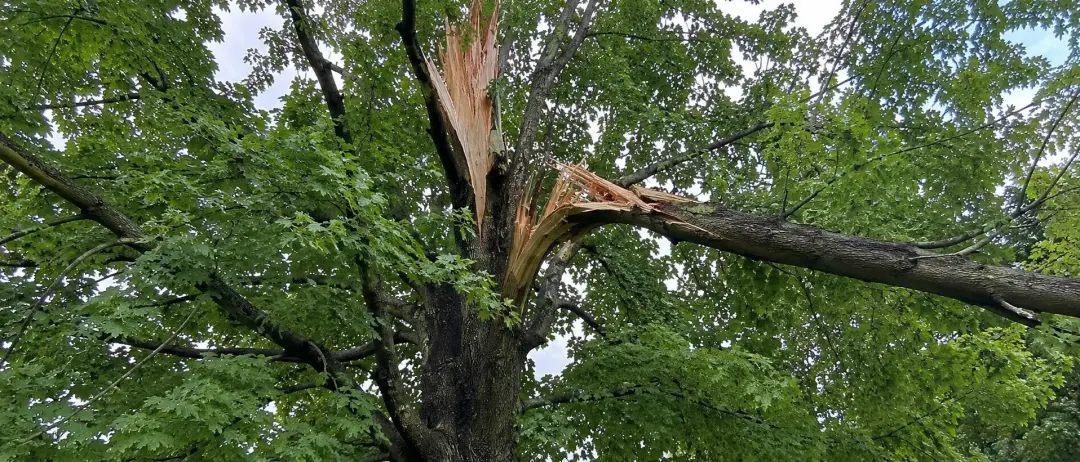
Large Cracks in the Trunk
Large cracks in a tree trunk can indicate that the structure is beginning to separate. Cracks may run vertically along the trunk, develop between major stems or appear around old wounds. Some trees can continue growing with minor cracks, but deep or expanding splits require professional assessment.
The risk increases when a crack extends through a large part of the trunk or opens when the tree moves in the wind. Water entering the damaged area can also contribute to decay over time. Listen for unusual creaking or splitting sounds during windy conditions, but do not approach closely to investigate if the tree appears unstable.
A cracked trunk may have reduced ability to support the weight of the crown. Where the tree stands near a building, road or frequently used area, the potential consequences of failure are greater. A tree surgeon can assess the depth, position and surrounding wood. Emergency removal or dismantling may be recommended when the remaining structure cannot provide dependable support.
Why Dangerous Trees Need Prompt Attention
A dangerous tree can change condition quickly, particularly during strong winds, heavy rain or further ground movement. A crack that appears stable in calm weather may widen when the crown moves, while weakened roots can lose more support as saturated soil softens.
Prompt assessment helps identify whether the tree can remain safely in place or needs urgent work. Falling branches can damage roofs, vehicles, fences and other structures. A complete tree failure can create much greater consequences, especially where the tree stands beside a home, road, pavement or public space. Delaying attention can also make the eventual removal more complicated if the tree moves into a more unstable position.
Emergency work does not always mean removing the entire tree immediately. A professional may be able to reduce the risk by removing a damaged limb, restricting access or completing controlled dismantling.
The correct response depends on the condition and surroundings. People should avoid standing beneath, climbing or attempting to cut a visibly unstable tree themselves. Large branches and trunks can move unexpectedly as tension changes.
Professional tree surgeons have equipment and training to assess these forces. Early action gives the removal team more opportunity to plan the safest practical method before a dangerous section fails without warning.
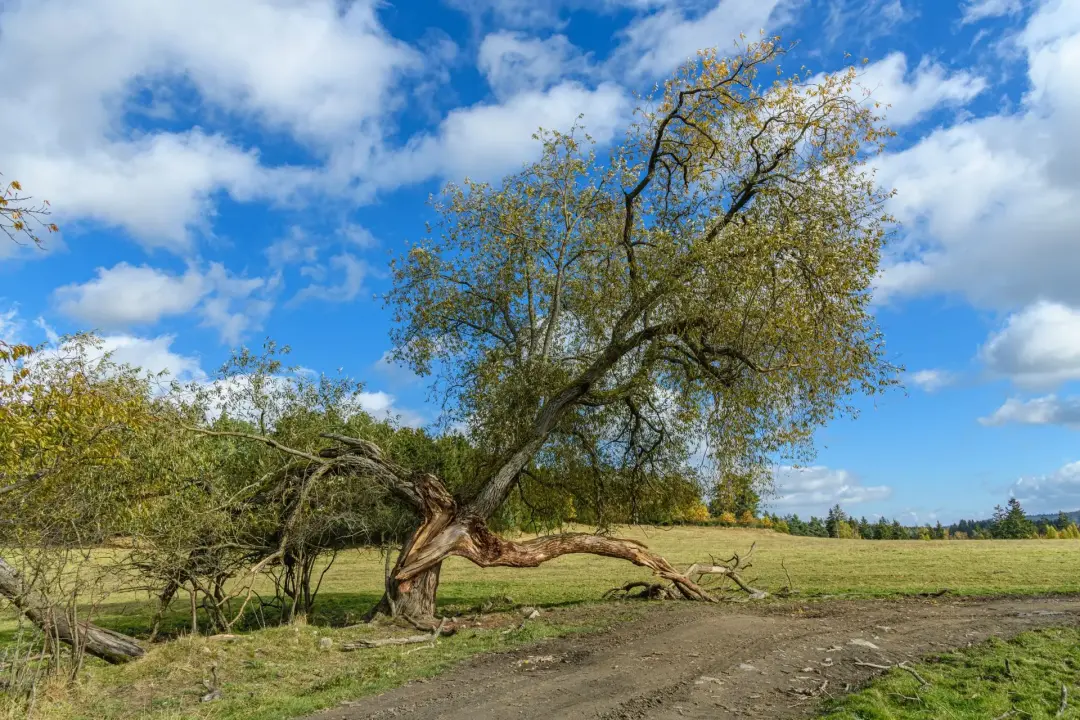
A Tree That Has Started Leaning Suddenly
Some trees naturally grow at an angle and remain stable for many years. A tree that suddenly develops a new lean is more concerning because it may indicate root failure, soil movement or storm damage. Look from a safe distance for lifted soil, exposed roots or new cracks around the base.
A recently leaning tree may also have branches sitting lower over a building, driveway or neighbouring property. Strong winds and saturated ground commonly contribute to sudden movement. Heavy rain can reduce the soil's ability to hold the root plate securely.
Do not attempt to straighten a large tree using ropes, vehicles or makeshift supports. Applying additional force may cause it to fail completely. Keep people and vehicles away from the direction of the lean and arrange a professional assessment.
Where major roots have moved or the lean is continuing to increase, emergency dismantling may be the safest solution.
Exposed or Damaged Tree Roots
Tree roots provide the structural support that keeps a tree anchored in the ground. When large roots become exposed, severed, crushed or decayed, the tree may lose some of its ability to resist wind and support the weight of the crown. The seriousness depends on how many important roots are affected and where the damage is located. Construction work is a common cause of root damage. Excavation for driveways, foundations, drainage or utilities can cut structural roots close to the trunk. Repeated vehicle movement and changes in soil level can also damage roots or compact the surrounding ground.
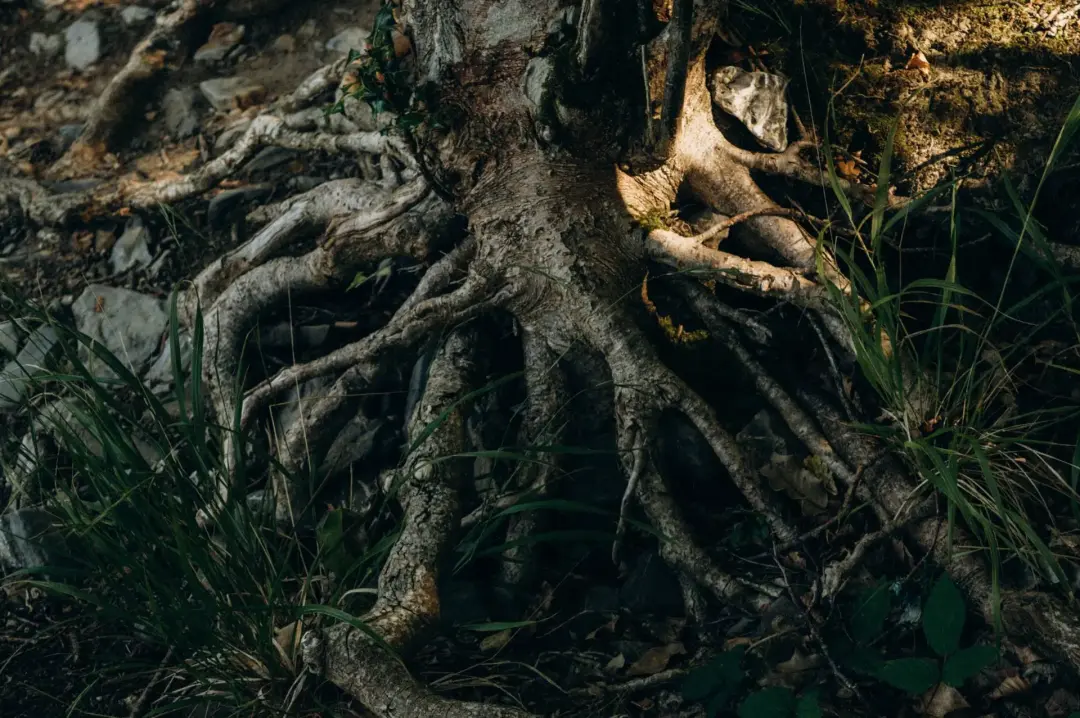
Storms and erosion may expose roots naturally. Look for fresh tears, cracks, soft timber or newly visible sections around the base. Not every exposed root indicates danger because some trees naturally have surface roots.
Avoid cutting large roots without professional advice. Removing one important root can change the balance of the entire tree. A tree specialist can assess root condition alongside the trunk, crown, soil and recent movement.
Serious root loss may require pruning to reduce loading, careful monitoring or full removal. Where the tree stands close to people or property, damaged structural roots should be investigated promptly rather than waiting for visible leaning to develop.
Roots Lifting from the Ground
Roots lifting from the ground can indicate that the whole root plate is beginning to move. This often happens when a tree starts to overturn during strong winds or when saturated soil can no longer hold the roots securely. You may see soil rising on one side of the tree while cracks or depressions appear on the other.
Large roots can become exposed suddenly, and the trunk may develop a new lean at the same time. Do not walk across raised soil or stand beneath the leaning side of the tree. Further movement can happen without much warning, particularly during continuing wind or rain. A tree surgeon should assess the tree as soon as possible.
Once the root plate has lifted significantly, restoring full stability may not be practical. Emergency removal often involves reducing the crown and trunk in controlled sections so less weight remains on the unstable root system while work progresses.
Large Broken or Hanging Branches
Large broken or hanging branches can present an immediate hazard because they may fall without warning. A limb can remain partly attached after a storm, become trapped among neighbouring branches or hang from damaged bark and fibres that are no longer strong enough to support its full weight. These branches are sometimes difficult to see from the ground. Warning signs include torn bark, fresh pale wood, unusual angles or a branch resting across another part of the crown. Wind can move the damaged limb and cause the remaining connection to fail.

Do not stand underneath a hanging branch or attempt to pull it down using a rope. Smaller pieces may fall before the main limb moves, and the branch may swing in an unexpected direction.
The area beneath should be kept clear of people, vehicles and pets until professional work is completed.
A tree surgeon may use climbing equipment, a mobile elevated work platform or controlled rigging to remove the branch safely. Large limbs may need to be cut into smaller sections and lowered rather than dropped.
The rest of the tree should also be checked for related storm damage, cracks or weakened unions. Removing one obvious branch is not enough if other parts of the crown have also become unstable.
Branches Falling Without Warning
Branches that fall without obvious storms or strong winds can indicate deadwood, internal decay or serious stress within the tree. Large unexplained branch failures should not be ignored, particularly when they happen more than once.
Look from a safe position for dead limbs, broken branch unions and areas where bark is missing. Some trees can also shed branches during very hot or dry weather. The level of risk depends partly on location. Falling branches over an unused part of a field present a different concern from branches above a driveway, garden, pavement or school.
A professional can inspect the crown and identify dead or structurally weak sections that are difficult to see from ground level. Where only isolated branches are affected, targeted pruning may be enough. If several major limbs have failed, wider decline or structural problems may mean the tree needs more extensive work or removal.
A Split or Forked Tree Trunk
Trees with two or more main stems can develop weak unions where the trunks join. A fresh split within this fork can be a serious warning sign because each stem may carry a large amount of weight. Strong winds, heavy branches and internal decay can all contribute to the union beginning to separate. Look for torn bark, fresh exposed wood or a gap that has appeared or widened between the stems. Older forks can also collect water and organic material, allowing decay to develop inside the joint.
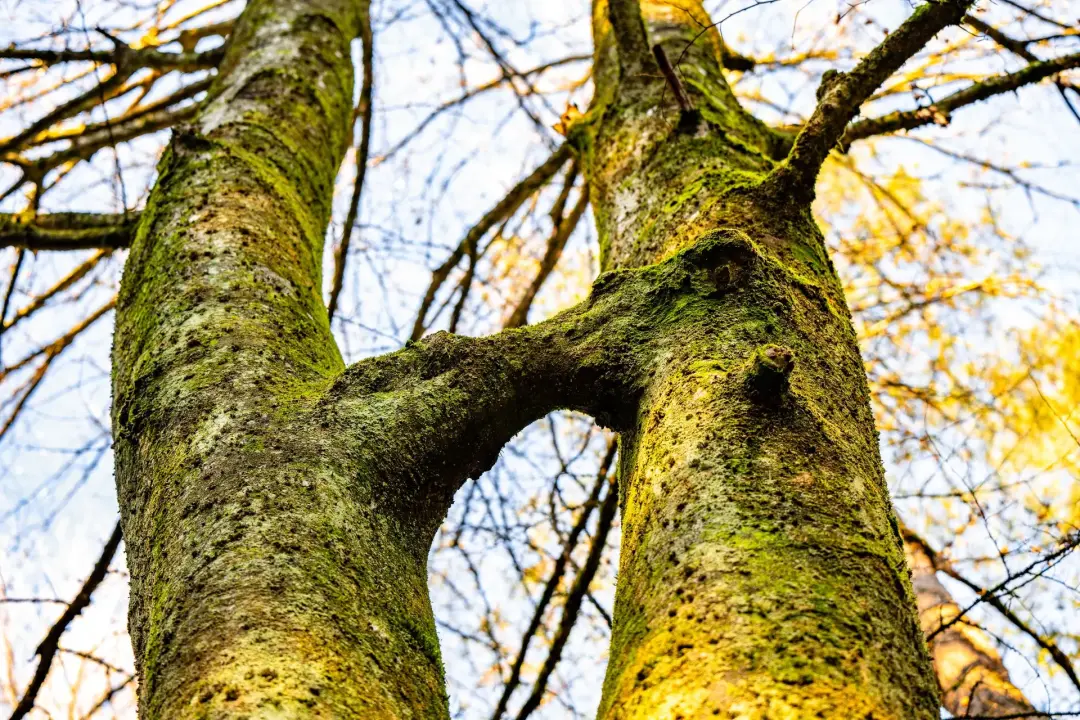
A split may continue opening during windy conditions even if the tree looks stable when the weather is calm. Failure of one stem can place additional force on the remaining structure.
Do not attempt to tie the trunks together with ordinary ropes, straps or cables. Improvised support may not withstand the forces involved and can give a false sense of security.
A tree surgeon can assess the depth of the split, the amount of sound wood remaining and the weight of each side of the crown. Some trees may be managed using pruning or specialist support systems.
Where the split is severe, actively moving or associated with decay, emergency dismantling may be necessary. Controlled removal prevents large stems from separating unexpectedly and falling onto nearby property or occupied areas.
Visible Trunk Decay or Rot
Visible decay or rot can indicate that structural wood within the trunk has weakened. Signs may include soft timber, crumbling areas, deep cavities, missing bark or sections that remain wet and discoloured. Decay often develops after previous damage, poor pruning, fungal activity or long-term moisture exposure.
A tree can sometimes continue producing leaves while significant internal deterioration is already present. The location and extent of decay matter. A small damaged area may not make the whole tree unsafe, whereas extensive decay around the base can seriously reduce support.
Do not drill or cut into the trunk yourself to investigate. This can damage healthy tissue and may make the condition worse. A professional arborist can assess how much sound wood remains and whether the crown is still supported adequately. Where serious decay affects a major structural area, emergency removal may be recommended, especially near buildings, roads or frequently used spaces.
Hollow Areas Inside the Trunk
A hollow trunk does not automatically mean a tree needs to be removed. Mature trees can sometimes survive for many years with internal cavities because most active growth and water transport occur closer to the outside of the trunk. However, a large hollow can reduce structural strength when only a thin shell of sound wood remains. Hollows may become visible through old wounds, broken branches or areas where decay has removed internal timber. You may notice open cavities, loose material, darkened wood or evidence that animals have entered the trunk.
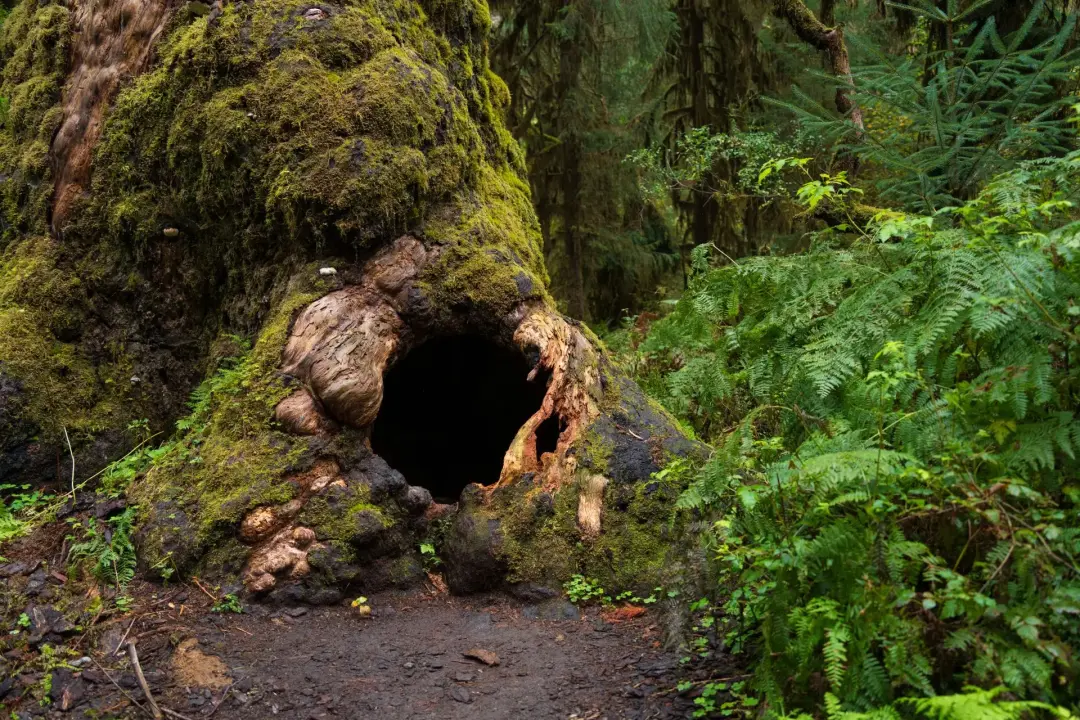
The position of the hollow is important. A substantial cavity at the base or directly beneath a major fork may create greater concern than a smaller hollow higher in the tree. Do not climb into or lean heavily against a hollow trunk to inspect it.
The remaining shell may be thinner than it appears. A professional arborist can assess wall thickness, surrounding decay and how much weight the tree is carrying.
Additional inspection methods may be recommended where the internal condition is uncertain. If the remaining sound wood is insufficient and failure could affect people or property, removal may be necessary. Smaller or stable hollows can sometimes be monitored as part of planned tree maintenance.
Fungal Growth Around the Base of the Tree
Fungal growth around the base of a tree can sometimes indicate decay within the roots or lower trunk. Mushrooms or bracket fungi may appear on the bark, surrounding soil or exposed roots. Not every fungus means the tree is dangerous. Some species feed mainly on dead material, while others are associated with decay of important structural wood.
Repeated fungal growth deserves attention, especially when combined with leaning, dead branches, cavities or soft timber around the base. Removing the visible mushrooms does not remove the underlying fungus.
The main organism may already be established within the wood or root system. A tree specialist can identify the likely fungus and assess whether it is affecting structural stability. Where serious root or basal decay is present, emergency removal may be necessary, particularly when the tree stands close to a house, road, pavement or other heavily used area.
Dead or Dying Branches in the Crown
Dead and dying branches can become increasingly brittle as they lose moisture and begin to decay. Eventually, they may break during strong winds, rain or even calm weather. Large dead branches over roads, driveways, gardens and buildings can therefore present a significant hazard. Signs include branches without leaves during the normal growing season, peeling bark, brittle twigs and a lack of buds or new shoots. Some trees naturally hold dead branches for long periods, so not every bare limb represents an immediate emergency.
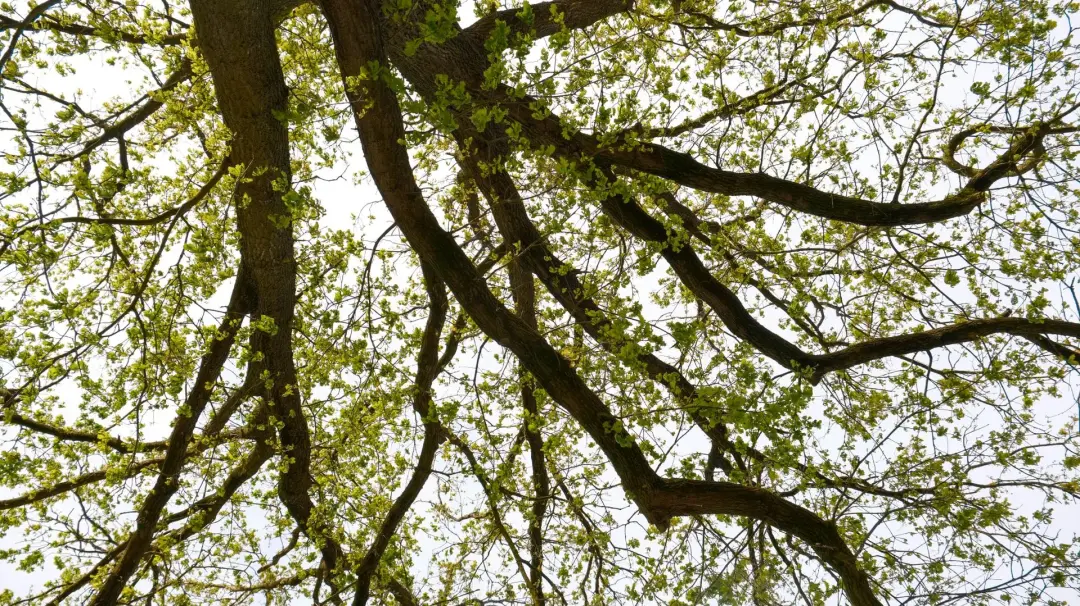
A professional tree surgeon can inspect the crown and identify which branches need removal. Climbing equipment or a mobile elevated work platform may be used where deadwood is difficult to reach. The wider condition of the tree should also be considered.
One dead branch may be an isolated problem, while widespread dieback can indicate root damage, disease or general decline. Removing dangerous deadwood may allow the tree to remain safely in place.
However, if a large proportion of the main crown has died, the structure and future health of the tree may need closer assessment. Prompt inspection reduces the chance of substantial dead branches becoming unexpected falling hazards over areas used regularly by people or vehicles.
A Large Part of the Tree Has Died
When a large proportion of a tree has died, there may be a serious underlying problem affecting its roots, trunk or overall health. Significant dead sections can create falling hazards as the timber becomes increasingly brittle.
Compare the dead area with the remaining healthy crown. One damaged branch is very different from half of the canopy failing to produce leaves or new shoots. Possible causes include disease, root damage, drought, flooding and major structural injury.
The reason should be investigated where possible because it may continue affecting the surviving areas. A professional can determine whether careful pruning could leave a balanced and viable tree. Removing too much of the crown may not always be practical.
Where major structural limbs are dead and the tree has limited long-term prospects, removal may be recommended. The urgency is greater where the tree stands beside buildings, roads, paths or other frequently occupied areas.
Storm Damage to the Tree
Storms can cause several forms of tree damage at the same time. Strong winds may snap branches, split forks and place heavy pressure on roots, while saturated soil can make the root system easier to move. A tree that remains standing after a storm is not necessarily undamaged. Inspect the tree from a safe distance once severe weather has passed.
Look for fresh cracks, hanging branches, missing limbs and changes in the normal angle of the trunk. Soil movement or exposed roots around the base may indicate that the whole root plate has shifted. Some storm damage is difficult to identify from the ground. A branch may remain caught high in the crown even though its main attachment has broken.
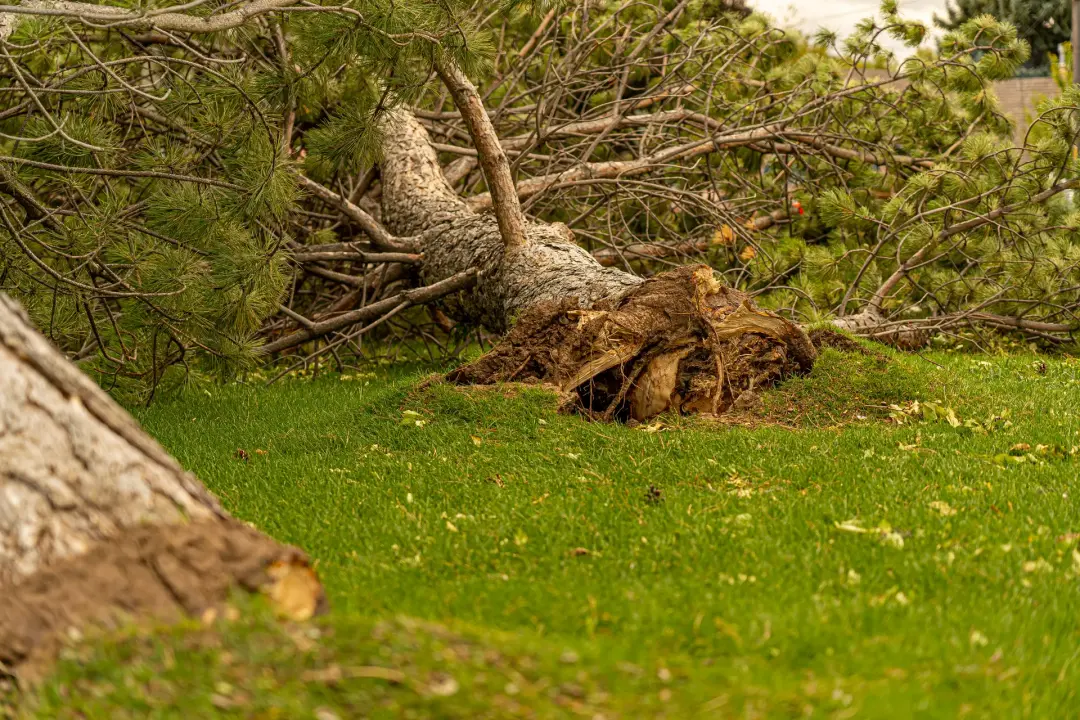
Continue to treat the area cautiously during further wind or rain. A weakened branch or root system may fail several hours or days after the original storm.
A tree surgeon can assess the complete structure and determine whether targeted pruning, crown reduction or emergency removal is required.
Do not focus only on the most visible broken limb. Other branch unions and sections of trunk may have developed hidden splits.
Prompt assessment after severe storms helps identify damage before another period of poor weather places additional pressure on the weakened tree.
Lightning Damage to the Trunk or Branches
Lightning can heat moisture within a tree very rapidly, causing bark to split, wood to crack and branches to break. Damage may appear as a long vertical wound down the trunk or areas where bark has been blown away. The strike can also affect internal tissues and roots even when the tree remains standing. Some consequences may therefore become visible gradually.
Keep away from hanging limbs or badly split sections after a lightning strike. Where electrical equipment or power lines are involved, additional specialist assistance may be required. A professional tree specialist can assess the amount of structural wood remaining and determine whether the tree has a realistic chance of recovery.
Some lightning-damaged trees can survive with suitable management. Others develop serious trunk splits or unstable branches that require urgent removal. The decision depends on the severity of the damage, the location of the tree and what could be affected if weakened sections fail.
Damage Caused by Strong Winds
Strong winds can place considerable pressure on the crown, trunk and roots of a tree. Large crowns catch the wind like a sail, transferring force down through the trunk and into the root system. Trees with weak branch unions, restricted roots or existing decay may be more vulnerable. Wind damage can include broken limbs, fresh cracks, twisted stems and sudden leaning. The root plate may also shift without the tree falling completely.
Look for changes that were not present before the windy weather. Torn bark, exposed pale wood and new gaps in branch unions can all indicate recent damage.
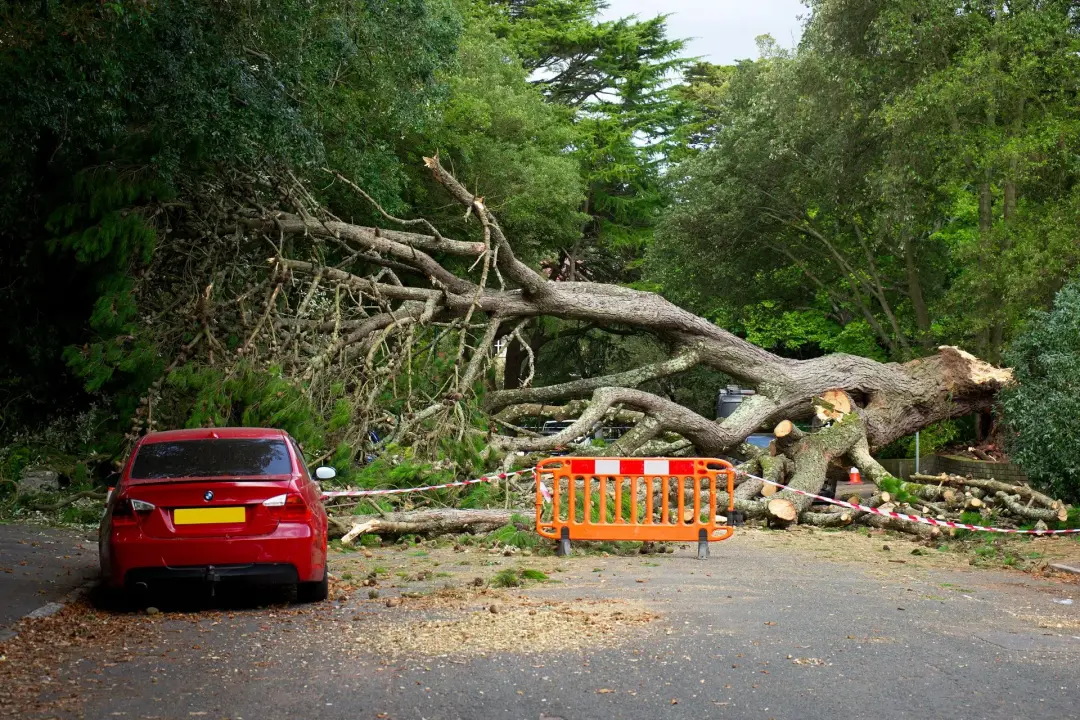
Do not stand beneath branches that appear loose or continue moving abnormally. If weather conditions remain severe, stay well outside the likely fall area.
The entire tree should be inspected rather than just one damaged limb. Wind can affect several parts of the structure at the same time.
A professional arborist may recommend removing hanging branches, reducing dangerous sections or dismantling the tree completely where stability has been lost.
Early action after strong winds can prevent damaged branches from falling later and can reduce the risk of a weakened tree failing during the next storm.
Trees Damaged by Heavy Rain or Flooding
Heavy rain and flooding can weaken trees by saturating the soil around their roots. When the ground becomes soft, the root system may have less resistance to movement, particularly during windy weather. Floodwater can also wash soil away and expose important structural roots.
Look for erosion, new leaning, raised ground and cracks around the base. Long periods of waterlogging may damage roots by reducing the oxygen available within the soil. The effects may continue after surface water disappears. Trees on slopes, riverbanks and recently disturbed ground can be particularly vulnerable.
Do not approach a tree that has begun leaning after flooding. Waterlogged ground can continue moving and may be unable to support people or heavy machinery safely. A tree professional can assess both the tree and surrounding ground conditions. Where important roots have moved or been exposed, urgent pruning or removal may be required.
Signs the Tree Is Becoming Unstable
Tree instability is often shown by several warning signs developing together rather than one isolated feature. A sudden lean, lifted soil, exposed roots, new trunk cracks or movement around the base can all indicate that the tree is losing structural support. Changes after storms should be treated especially seriously. A tree that stood upright before strong winds but now appears tilted may have experienced root plate movement. Fresh cracks in the ground or gaps between roots and soil can provide further evidence.
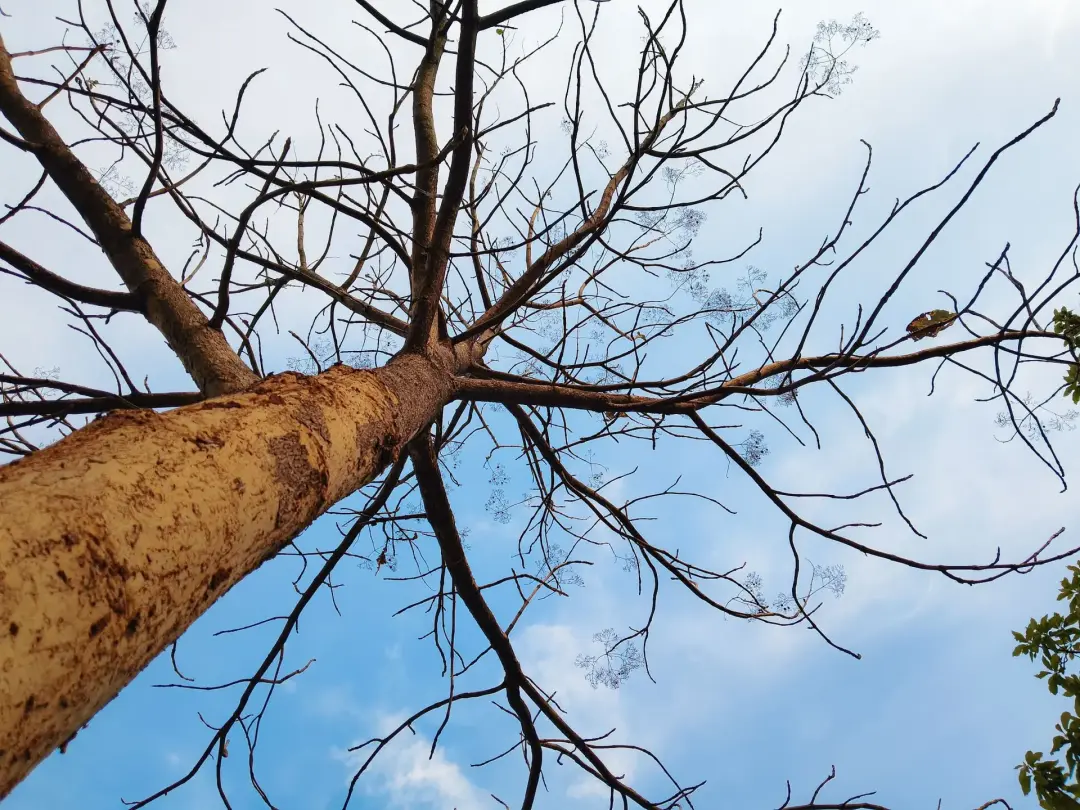
Listen for unusual cracking or creaking from a safe distance during windy weather, but do not remain close to the tree simply to observe movement. Branches may also change position as the trunk begins to lean.
A canopy that previously cleared a roof or driveway may start hanging much closer. Keep people, pets and vehicles away from the likely fall direction until professional assessment has taken place. Do not attempt to stabilise the tree using household ropes, stakes or vehicles.
Large trees create forces far beyond what simple supports can manage. A qualified tree surgeon can assess the trunk, crown, roots and surrounding ground. Where the tree continues moving or important support has been lost, controlled dismantling or emergency removal may be the most appropriate response.
Blackdown Treescapes provides tree removal, tree surgery, tree felling, stump grinding, tree pruning, hedge trimming, and maintenance services across Exmouth, Honiton, and Sidmouth. Our rated tree surgeons help customers maintain trees, hedges, gardens, and green spaces. For a friendly, reliable tree surgeon in Exmouth, call 07921 241875, submit a message, or ask for a quote.