Can Crown Reduction Help Manage an Overgrown Tree?
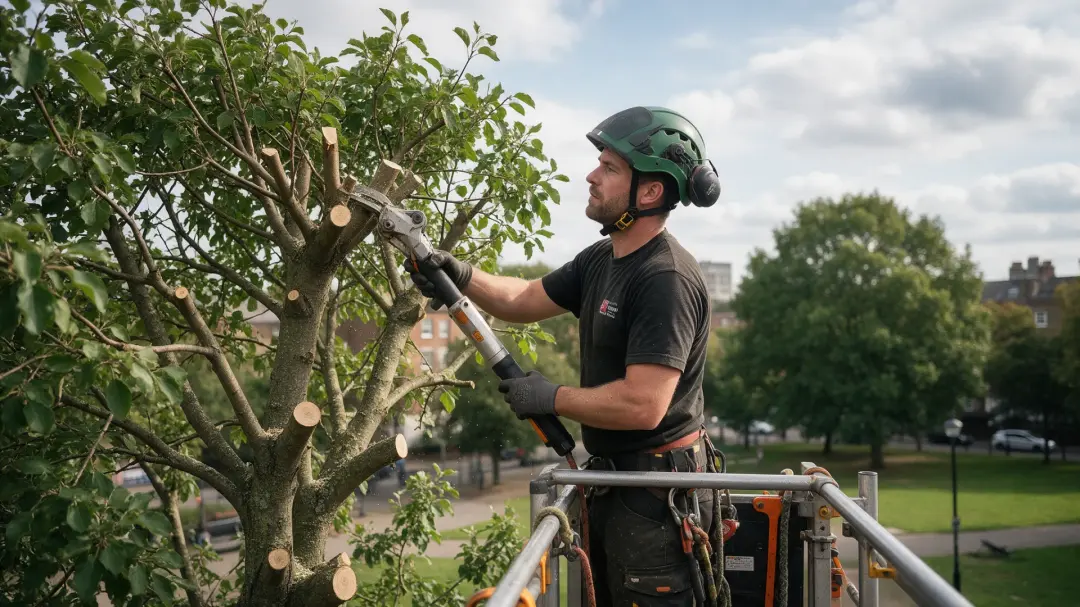
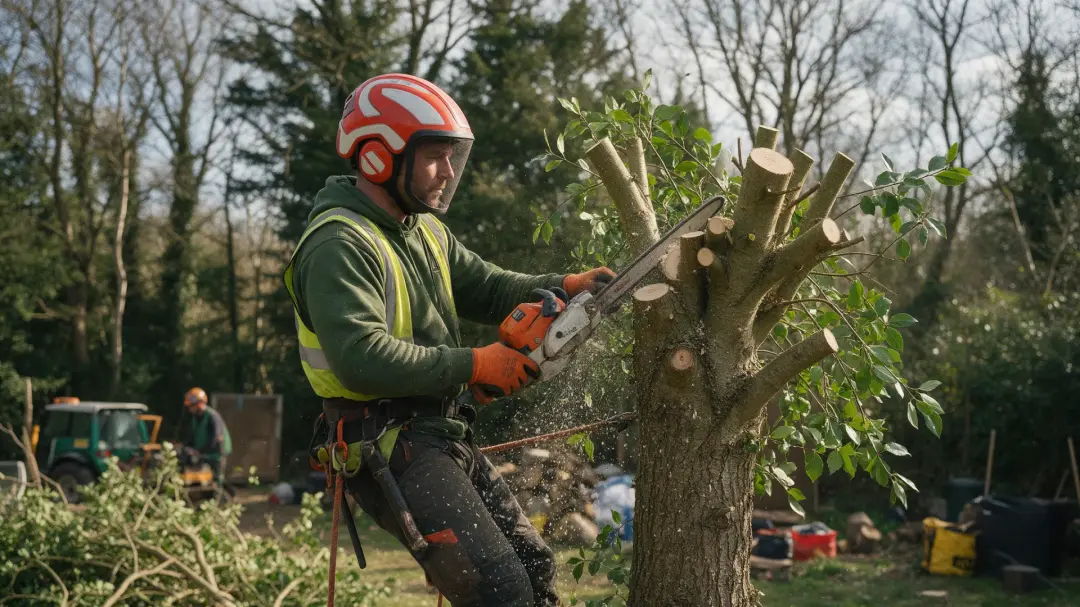
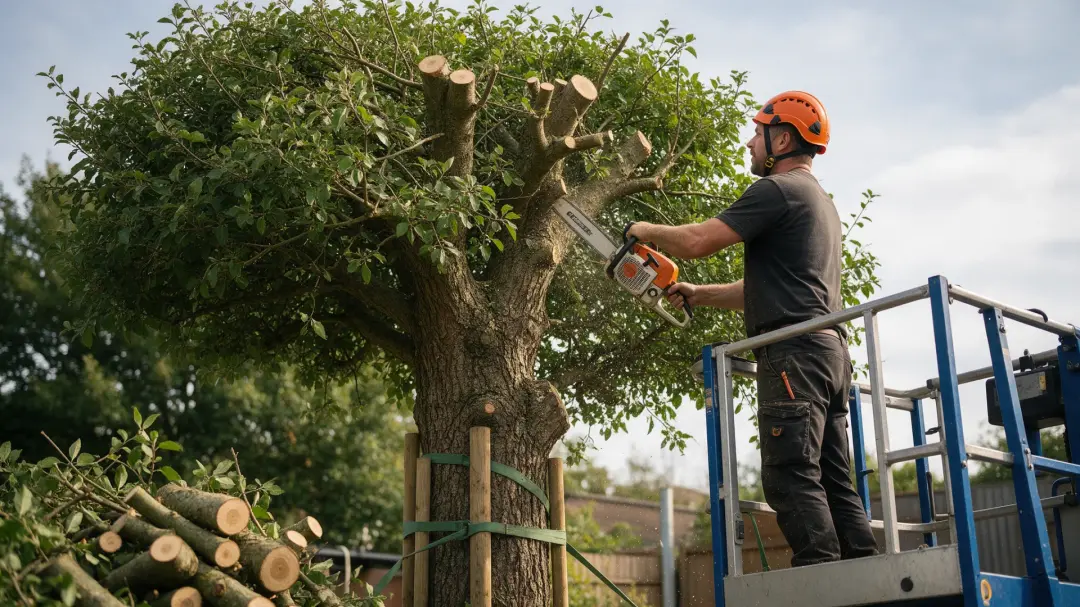
Yes, crown reduction can help where a suitable tree needs a smaller height or spread while retaining a viable, naturally shaped crown. It shortens selected branches to appropriate growth points. The decision depends on condition and the actual conflict, rather than size alone.
A large tree is not automatically unsafe. Define what overgrown means: roof contact, low branches and unwanted shade are different problems and may need different operations.
Match the treatment to the conflict
Targeted work may be enough for branches approaching a roof. Low growth across a path may need lifting rather than reducing the top. Thinning changes density and should not be confused with making the crown outline smaller.
Published arboricultural terminology distinguishes reduction, raising, thinning and restoration. Asking for a trim leaves those outcomes unresolved. Start with a measured objective and let the tree assessment determine the method.
Specify the finished size
A quotation should identify the tree and describe the result in measurable terms. An illustrative change from a 14-metre height to 12 metres is clearer than an unexplained percentage. This example is not a recommended reduction for every tree.
Height, branch length, spread and foliage volume are different measurements. Applying the same percentage to each does not create the same treatment. Ask which dimensions will remain and how suitable living growth and natural form will be preserved.
Reduction is different from topping
Indiscriminately cutting across the upper branches can leave large stubs and a different structure. It may stimulate regrowth while leaving the original long-term conflict unresolved. A reduction follows branching structure rather than creating a flat-topped crown.
The RHS general pruning guide advises avoiding removal of more than one fifth of the canopy in a year. This is broad horticultural guidance, not a target or a replacement for a tree-specific prescription. Sensitive or stressed trees may need less intervention or none.
Understand the limits
Pruning cannot replace lost roots, reverse advanced decay or turn a large species into a permanently small one. If the intended dimensions require major wounds or leave too little live crown, the desired result may be incompatible with retaining that tree.
Suspected building damage also needs more than an assumption that reducing the top will solve it. Soil, roots and the actual defect require investigation. Do not treat canopy work as a guaranteed structural remedy.
Plan permission, timing and future growth
Check protection status before work. The application and quotation should describe the same treatment; permission for one pruning operation does not authorise unlimited reshaping. Wildlife and seasonal suitability also affect timing.
A reduction creates a smaller crown at that visit, but growth continues. Agree the observations that trigger another review. Repeated heavy cutting without assessing the response can undermine the original retention objective.
Current tree-cover policy provides context
Defra's tree-cover delivery plan, checked on 8 October 2026, retains England's statutory target of 16.5% canopy and woodland cover by 2050. This is a national target, not a requirement to retain every tree regardless of condition.
Retention preserves established shade and habitat while replacements take time to grow. Equally, a badly mismatched tree that fits only after damaging repeated cuts may warrant a replacement discussion. The assessment should explain both benefits and limits.
Keep pollarding and reduction distinct
Reduction retains a branching crown. Pollarding maintains selected trees through repeated cutting to a defined framework. An established pollard can need its own regime, while a natural crown may be unsuitable for conversion.
The service button below links to crown work, where pollarding can also be discussed. Its wording does not mean that these treatments are interchangeable.
Summary
Crown reduction can resolve a defined space conflict when the tree can tolerate the work. Agree a finished size and a review of its response. Blackdown Treescapes can assess whether reduction or another treatment provides a workable long-term result.